


















Knowledge Center: Your Go-To Resource for ADUs and Tiny Living
Knowledge Center: Your Go-To Resource for ADUs and Tiny Living
Email [email protected]
Phone 860-TINY-HOM (es)
How Much Does an ADU Increase Property Value in Connecticut?
Many homeowners want to know one thing before they build.
Will an ADU actually increase property value?
It is a fair question. An accessory dwelling unit is not a small project. It affects your budget, your land, your home, and your long-term plans.
The answer is not the same for every property. ADU value depends on your lot, your town rules, the design, the build quality, and how the space will be used.
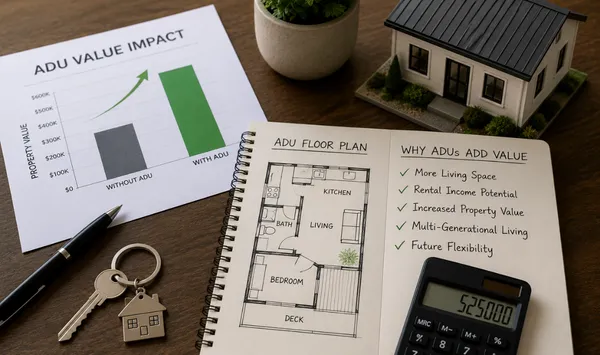
For many homeowners, a well-planned ADU can add meaningful value. It can create private living space. It can support rental income. It can help family live nearby with more independence. It can also make your property more flexible for the future.
This guide explains what affects ADU property value, what to expect before building, and what mistakes to avoid.
How Much Value Can an ADU Add to a Home?
An ADU can increase property value because it adds a separate, usable living space to your property.
That space may be used as an in-law suite, backyard cottage, guest house, rental unit, private home office, caregiver space, or future downsizing option.
The most important point is this.
An ADU does not only add square footage. It adds function.
A home with a legal accessory dwelling unit can appeal to buyers who want more than a standard house. Some buyers need space for a parent. Others want rental income. Some want a one-level living option. Others want a separate entrance for privacy.
In Connecticut, an accessory apartment is defined as a separate dwelling unit on the same lot as a larger principal dwelling. It must have cooking facilities and comply with applicable building, fire, health, and safety rules.
That matters because a legal, permitted ADU is different from an informal finished space. A finished basement or spare room may be useful. But a properly designed ADU can offer a stronger long-term value story because it functions as its own living area.
Still, value is property-specific.
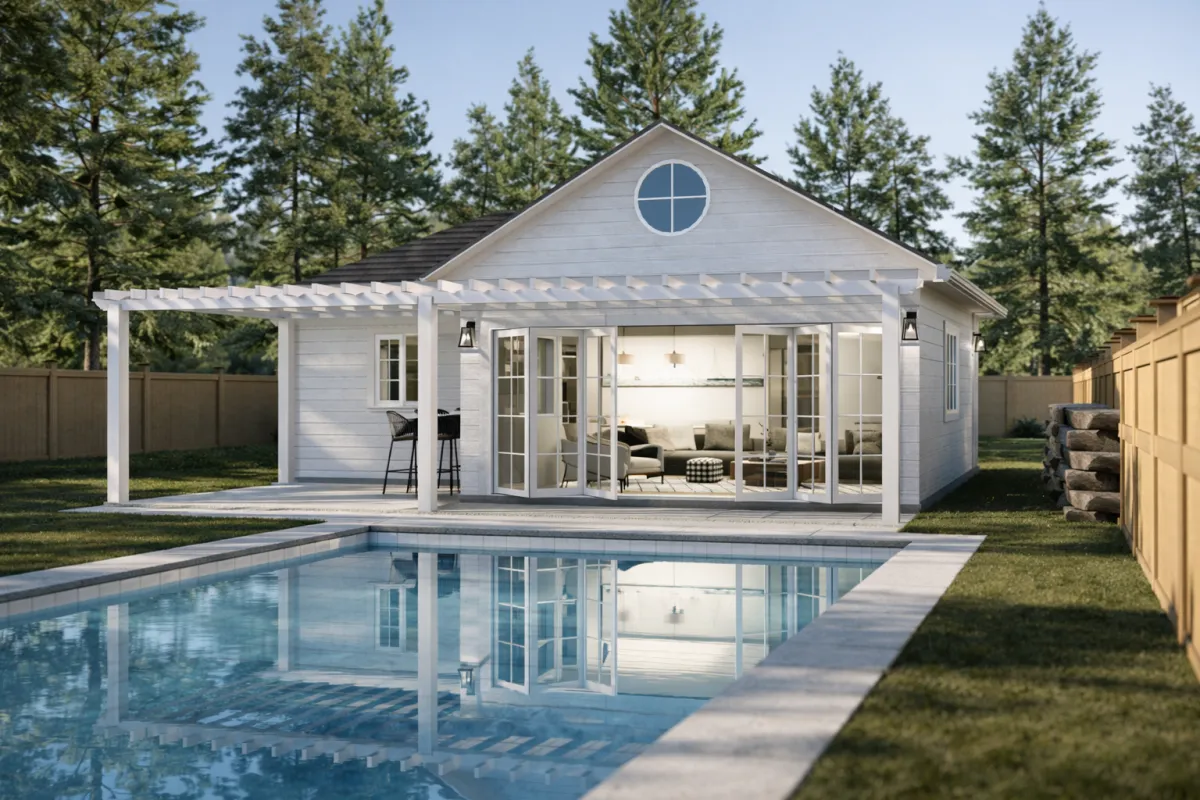
A detached ADU may add strong appeal when privacy is the main goal. An attached ADU may work better for family care. A garage conversion may make sense when the existing structure is suitable. A one-level in-law suite may be especially valuable for aging parents or accessibility needs.
The best way to think about ADU value is simple.
The right ADU should improve how the property works today and how it can be used later.
What Affects ADU Property Value?
Several factors influence how much value an ADU may add.
Property Feasibility
Feasibility comes first.
Before you choose a floor plan, you need to know what your property can support. Lot size, setbacks, wetlands, slope, driveway access, parking, septic, sewer, water, electric, and utility runs can all affect the project.
This is one of the biggest concerns homeowners have. Many buyers are not starting with design inspiration. They are starting with risk. They want to know if they can legally build, what the real cost may be, and whether the project will solve their family or income need.
That is why a property review is so important.
A beautiful ADU idea is only useful if it fits the land.
Local Zoning and Permits
ADU rules can vary by town.
Connecticut Public Act 21-29 addressed accessory apartments and local zoning. It required certain municipalities to allow ADUs as of right unless they used the opt-out process.
Even with state-level rules, homeowners still need to confirm local requirements. Your town may have rules for size, placement, parking, owner occupancy, utilities, or other site conditions.
This is why “ADU contractor near me” searches often lead to confusion. A local contractor should not just build. They should help you understand the path from feasibility to design to permits to construction.
ADU Type
The type of ADU affects both cost and value.
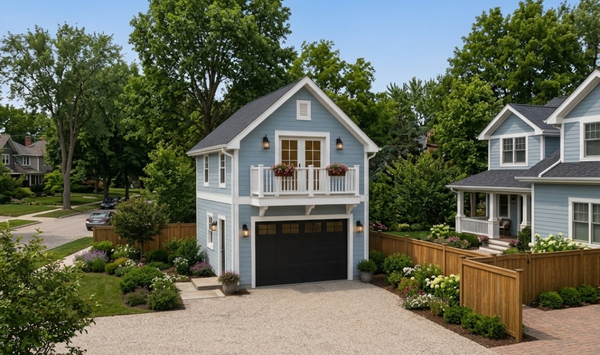
A detached ADU offers separation and privacy. It can feel like a private small home on the property.
An attached ADU may be easier for family use. It can allow close access while still creating separate living space.
A garage conversion may reduce the need for new building area. But it depends on the condition of the existing structure.
A custom ADU gives you more control over layout, accessibility, finishes, and long-term use.
There is no one best option for every homeowner. The best ADU is the one that fits your property, your budget, and your reason for building.
Use Case
The reason you are building matters.
An ADU for a parent may need one-level living, no steps, wider doorways, a safe bathroom, and easy access to the main home.
An ADU for rental income may need privacy, parking, storage, durable finishes, and a layout that works for tenants.
An ADU for future downsizing may need comfort, storage, natural light, and long-term livability.
These use cases affect design decisions. They also affect perceived value.
A generic space may not add as much value as a well-planned space that solves a clear problem.
Build Quality
Build quality matters.
A custom accessory dwelling unit should feel permanent. It should match the property. It should be comfortable, efficient, and code-compliant.
Poor layout, cheap finishes, weak site planning, or unclear permitting can limit the value of the project.
A strong ADU should feel like a real home. Not an afterthought.
Want to know whether your property is a fit for an ADU? Schedule a consultation to review feasibility, layout options, cost factors, and next steps.
Request a Feasibility Analysis
What Should You Expect for Cost, Timeline, and ROI?
ADU cost and ADU property value are connected.
A lower-cost project is not always the better investment. A larger project is not always the better investment either.
The goal is to build the right ADU for the property.
ADU Cost Factors
Costs can change based on many items.
These may include design, engineering, permits, foundation, framing, finishes, appliances, HVAC, plumbing, electric, water, sewer, septic, trenching, grading, driveway access, and site work.
This is where many homeowners get nervous.
They do not only ask, “How much does an ADU cost?” They ask, “What does that price include?” and “What could increase later?”
That concern is valid. The biggest trust issue for many ADU buyers is the fear that the starting price is not the real price.
A good ADU contractor should explain what is included, what is not included, and what property conditions may affect the final cost.
Timeline
The ADU timeline is more than construction.
The full process may include:
Initial Consultation
This is where you explain your goal. Are you building for a parent? Rental income? A future guest house? Downsizing? A private backyard living space?
Property Review
This step looks at feasibility. It may include lot conditions, zoning, septic, utilities, setbacks, parking, access, and town requirements.
Design and Planning
This is where the ADU starts to take shape. The layout should match the use case.
Pricing and Scope
This step should clarify what is included. It should also identify possible cost variables.
Permits and Approvals
Your project must follow local requirements. Permitting can affect timing.
Construction
This is the build phase. It may include site work, foundation, framing, mechanical systems, interior work, inspections, and final completion.
The timeline depends on the property, town, design, and scope.
A detached ADU may take longer than a garage conversion. A project with septic or wetlands questions may need more planning. A project with a simple site may move faster.
ROI
ADU ROI is not only about resale.
Return on investment can include:
Rental income.
Increased property value.
Housing for a parent.
Reduced need for assisted living.
Aging-in-place flexibility.
Future downsizing.
Private guest space.
More useful land.
For some homeowners, rental income is the main benefit. For others, family care is the reason. For others, it is the ability to create a long-term housing solution without buying another property.
That is why the value of an ADU should be measured in both financial and practical terms.
Mistakes to Avoid Before Building an ADU
The right planning can protect your budget and your property value.
Here are the biggest mistakes to avoid.
Mistake 1: Assuming Your Property Can Support Any ADU
Every lot is different.
Your neighbor may be able to build a detached ADU. Your property may require an attached option. Another homeowner may have the right garage for a conversion. Your garage may not be suitable.
Do not start with assumptions.
Start with feasibility.
Mistake 2: Looking Only at the Starting Price
Starting price matters. But it is not the full picture.
Ask what is included. Ask what is excluded. Ask what could add cost. Ask how utilities will work. Ask whether septic may be an issue. Ask if a survey is needed.
A clear scope helps you make a better decision.
Mistake 3: Ignoring Local Rules
Town rules matter.
Before you invest in plans, confirm what your town allows. You need to know if the ADU can be attached, detached, converted, or placed where you want it.
This helps avoid delays and redesigns.
Mistake 4: Forgetting About Utilities
Utilities can affect cost and placement.
Water, sewer, septic, electric, trenching, and tie-ins should be discussed early.
A detached ADU located far from the main home may create different utility needs than an attached ADU or garage conversion.
Mistake 5: Not Involving the Full Decision Group
Many ADU projects involve more than one decision maker.
A spouse may care about budget. A parent may care about comfort. An adult child may care about privacy. A co-owner may care about resale value.
Bring key people into the process early.
This helps avoid delays later.
Mistake 6: Comparing an ADU to a Basic Addition Too Quickly
An addition may add space.
An ADU can add independent living.
That difference matters.
An ADU may include a kitchen, bathroom, sleeping area, separate entrance, and more privacy. It can serve more future uses than a standard addition.
Do not compare only cost. Compare function.
Mistake 7: Choosing a Design Before Knowing the Goal
Design should follow purpose.
An ADU for rental income may need a different layout than an in-law suite. A unit for aging parents may need different features than a guest house. A downsizing plan may need more storage and long-term comfort.
The clearer the goal, the better the design.
Frequently Asked Questions
Does an ADU always increase property value?
Not always. The value depends on legality, design, quality, location, and demand. A permitted ADU that is well built and useful is more likely to support property value.
Is a detached ADU better than an attached ADU?
It depends on your goal. A detached ADU may offer more privacy. An attached ADU may work better for family care or easier access.
Can an ADU create rental income?
Yes, if local rules allow it and the unit is properly permitted. Rental income potential can be one reason homeowners consider an ADU.
Is an ADU better than an in-law suite?
An ADU can function as an in-law suite. The best choice depends on whether you need a fully independent living space, a separate entrance, a kitchen, and long-term flexibility.
Should I build an ADU before selling my home?
That depends on your timeline, budget, and market. An ADU may help your property stand out, but you should review feasibility, cost, and likely use before making that decision.
Is an ADU Worth It?
So, how much does an ADU increase property value?
The honest answer is that it depends.
It depends on your property, your town rules, your design, your budget, and your reason for building.
But a well-planned ADU can add meaningful value by creating private living space, rental income potential, family flexibility, and long-term use.
The best next step is not guessing. It is getting a property-specific review.
Contemporary Tiny Homes is a full-service ADU contractor that designs and builds custom accessory dwelling units for homeowners across Connecticut.
Ready to find out what is possible on your property? Book a consultation to review your ADU feasibility, cost range, design options, and next step.


Copyright 2026. All rights reserved. Norwalk, CT
Connecticut's New Home Construction Contractor License: #NHC.0017654
EPA Lead-Safe Certified NAT-F269966-1