













Knowledge Center: Your Go-To Resource for ADUs and Tiny Living
Knowledge Center: Your Go-To Resource for ADUs and Tiny Living
Email [email protected]
Phone 860-TINY-HOM (es)
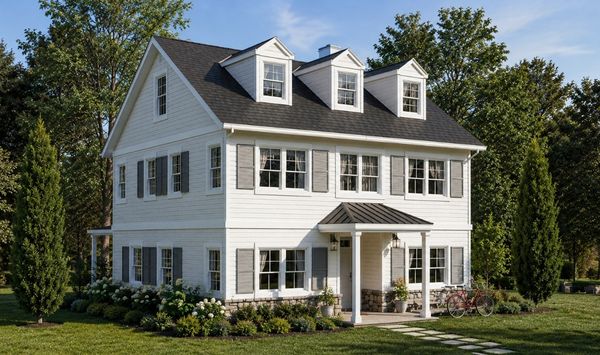
How Much Does a 3 Bedroom ADU Cost in Connecticut?
A 3 bedroom ADU can be a smart way to create more room without buying another property.
It can give a parent a private place to live. It can help adult children stay close while still having independence. It can support rental income. It can also become a future downsizing plan for the homeowner.
But before most people choose a floor plan, they want one answer first.
How much does a 3 bedroom ADU cost in Connecticut?
The honest answer is that the price depends on your property, your town, your layout, and the site work needed to build it the right way. A 3 bedroom accessory dwelling unit is not priced like a small shed or a basic backyard office. It is a real home with bedrooms, bathrooms, utilities, permits, foundation work, mechanical systems, and finish choices.
This guide explains what affects the cost, what to expect during the ADU design-build process, and how to avoid expensive surprises before you request a quote.
ADU Financing
How Much Does a 3 Bedroom ADU Cost in Connecticut?
The direct answer is this: a 3 bedroom ADU needs a property-specific quote.
That may feel less simple than a flat price. But it is the most accurate answer.
A 3 bedroom ADU cost in Connecticut depends on several things. These include the size of the unit, the number of bathrooms, the foundation, utility connections, septic or sewer conditions, town requirements, site access, grading, driveway needs, finishes, and whether the unit is attached or detached.
A smaller ADU may be easier to estimate from a standard model. A 3 bedroom ADU is usually more custom. It needs more square footage. It may need a larger kitchen. It may need more storage. It may need a stronger layout for privacy, family living, or rental use.
That is why online pricing can be misleading.
The better question is not only, “What does a 3 bedroom ADU cost?”
The better question is, “What would a 3 bedroom ADU cost on my property?”
That is the number that matters.
A good ADU contractor Connecticut homeowners can trust should not rush you into a design before checking the property. The first step should be feasibility. Your contractor should help answer whether the ADU is allowed, where it could go, what size may work, what utilities may be needed, and what could affect the total investment.
What Affects the Cost of a 3 Bedroom ADU?
A 3 bedroom ADU has more moving parts than a smaller accessory dwelling unit. Here are the biggest cost drivers.
Size and layout
The layout is one of the first cost factors.
A 3 bedroom ADU needs enough space for bedrooms, a kitchen, a living area, bathrooms, laundry, storage, and mechanical systems. Some homeowners want one bathroom. Others need two. Some want a compact layout for rental income. Others want a more comfortable in law suite for a parent or long-term family use.
The more square footage you build, the more materials, labor, and systems are usually needed. But size is not the only issue. A smart layout can make a smaller footprint feel more useful. A poor layout can waste space and raise the budget without improving how the home lives.
Attached ADU vs detached ADU
The type of ADU also affects cost.
An attached ADU may connect to the main house. This can sometimes help with utility access. It may also work well for families who want connection and privacy at the same time.
A detached ADU gives more separation. Many homeowners like this for a private small home on the property, a backyard living space, or a rental unit. A detached ADU can feel more independent. But it can also require more site work, longer utility runs, separate access, and more planning for placement.
The best option depends on the property, the use case, and town rules.
Utilities and trenching
Utilities are a major part of ADU construction.
A 3 bedroom ADU needs water, sewer or septic connection, electric service, heating and cooling, and possibly gas. The distance between the main home and the new ADU can affect the cost. Longer trenching can mean more labor, more materials, and more site disruption.
This is one reason a backyard ADU far from the main home may cost more than a unit placed closer to existing connections.
Before you commit to a layout, ask how utilities will be handled. Ask what is included. Ask what could change after the site review.
Septic, sewer, and property systems
Septic is one of the biggest questions for many homeowners.
If your home is on public sewer, the process may be different than a home with a private septic system. If you have septic, the system may need to be reviewed to see whether it can support another dwelling unit. The number of bedrooms can matter because bedrooms often affect design assumptions around wastewater capacity.
A 3 bedroom ADU may create more system demand than a studio or 1 bedroom ADU. That does not mean it cannot work. It means the property needs to be reviewed before anyone gives you a reliable number.
Survey, setbacks, parking, and lot conditions
Your lot can also change the budget.
A narrow lot may limit placement. A sloped lot may need grading. Wetlands may require extra review. Trees, ledge, drainage, driveway access, and parking can all affect cost. Setbacks can also change where the ADU can be built.
A current survey can help the process move faster. If you do not have one, your ADU builder may need to help you understand what documents are needed before design and permitting.
Finish level and accessibility
Finishes matter too.
Cabinets, countertops, appliances, flooring, tile, lighting, windows, siding, roofing, and fixtures can all raise or lower the budget. A rental ADU may need durable finishes. A family ADU may need comfort, storage, and long-term livability.
If the ADU is for a parent or someone with mobility needs, accessibility may also affect the design. One-level living, wider doors, no steps, a walk-in shower, better lighting, and safer entry points can all be worth planning early.
Want to know whether your property is a fit for a 3 bedroom ADU? Schedule a consultation to review feasibility, cost drivers, layout options, and next steps before you commit to a design.
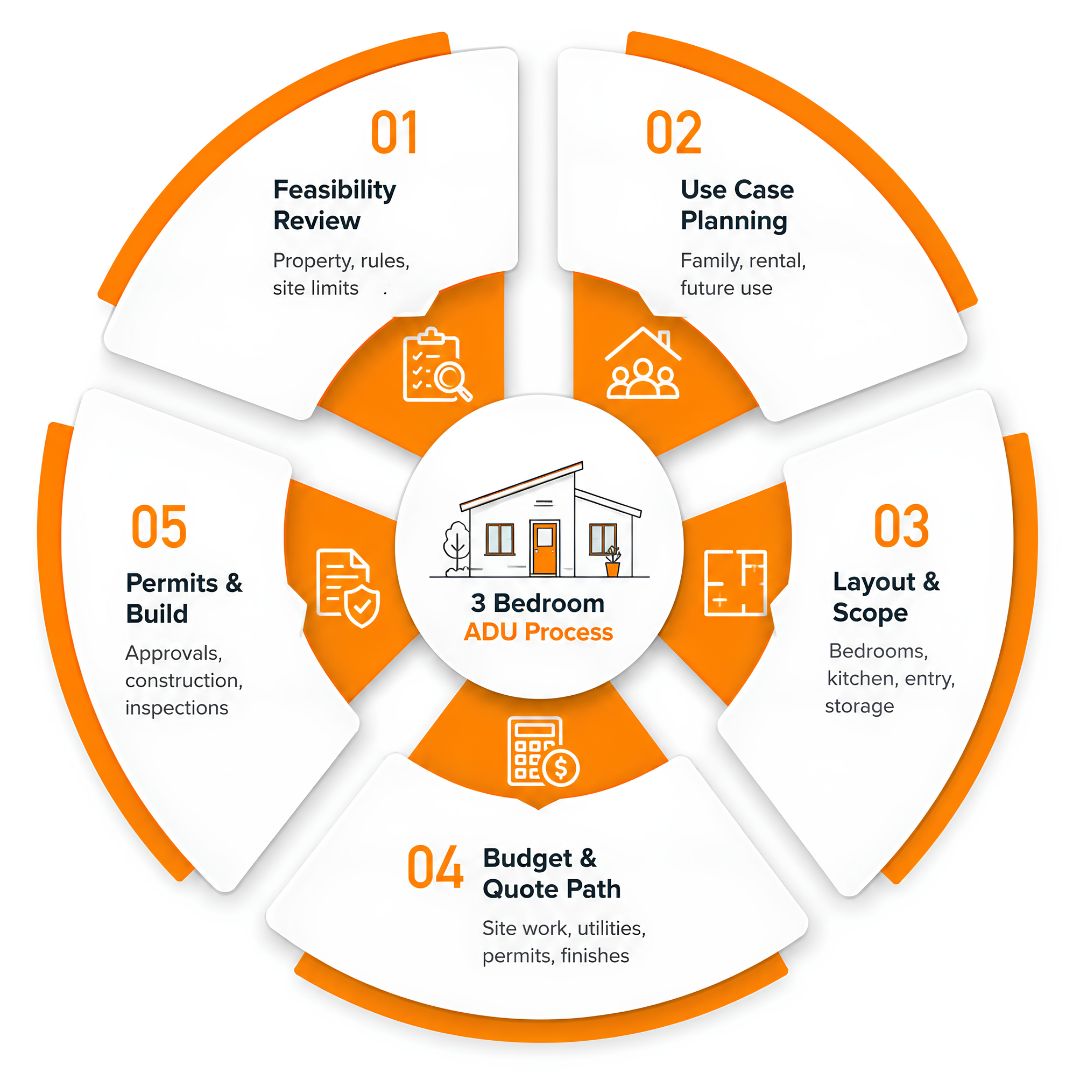
What Is the Process for Building a 3 Bedroom ADU?
A clear process helps prevent delays and surprises.
The right ADU design-build process should start with questions, not pressure.
Step 1: Feasibility review
This is where your ADU builder checks the basics. Can the property support an ADU? Does the town allow the type of ADU you want? Is attached or detached better? Where could it go? Are there setbacks, wetlands, septic, parking, or access issues?
This step is important because it helps you avoid falling in love with a plan that may not work on your lot.
Step 2: Use case planning
Next, the design should match the reason you are building.
A 3 bedroom ADU for family may need privacy, comfort, and easy access. A unit for rental income may need parking, separate entrance, storage, and durable finishes. A unit for family now and rental later needs flexibility.
A good ADU contractor should help you think through how the space will be used today and how it may be used later.
Step 3: Layout and scope
Once the property and goals are clearer, the layout can begin.
This is where you decide bedroom count, bathroom count, kitchen size, laundry, storage, entry location, windows, and outdoor access. This is also where the scope should be explained in plain language.
You should know what is included and what is not included before moving forward.
Step 4: Budget range and quote path
After the site and design direction are clearer, your contractor can help you understand the likely investment range.
A reliable quote should not hide major cost factors. It should account for the structure, site work, utilities, permits, finishes, and known property conditions. Some items may still need outside review, but those should be explained early.
Step 5: Permits, construction, and inspections
ADU permits and approval steps can vary by town. Construction also depends on weather, site conditions, material timing, utility work, and inspections.
Do not judge the timeline by build time alone. The full timeline includes feasibility, design, documents, permits, site prep, construction, inspections, and final details.
What Should Be Included in a 3 Bedroom ADU Quote?
A strong ADU quote should be clear.
It should not leave you guessing about what the number means.
Ask your contractor to explain the full scope. This may include design, permit support, foundation, framing, roofing, siding, windows, doors, plumbing, electrical, HVAC, insulation, drywall, paint, flooring, cabinets, counters, fixtures, utility connections, site work, and final cleanup.
You should also ask what may not be included.
Common items to clarify include appliances, surveys, septic upgrades, long utility runs, driveway changes, tree removal, drainage, special engineering, wetland review, upgraded finishes, and changes after design approval.
This is not about trying to make the price look lower. It is about understanding the real project.
A 3 bedroom ADU is a serious investment. You should feel confident about what you are buying, what could change, and what steps are needed before construction starts.
The best ADU builder Connecticut homeowners can hire will explain pricing in a way that is specific, honest, and easy to understand.
How Long Does It Take to Build a 3 Bedroom ADU?
The timeline can vary.
A 3 bedroom ADU usually takes longer than a smaller unit because there is more to design, permit, coordinate, and build. But the main timeline issue is not only construction. It is the full path from first conversation to move-in.
The early stage includes feasibility review, site review, design, budgeting, and document preparation. The next stage includes permits and town review. After that comes site work, foundation, framing, utilities, interior work, inspections, and final punch list.
Town approval timelines can vary. Site conditions can also change the schedule. Septic review, survey needs, wetland questions, utility upgrades, or driveway work can add time.
This is why the best first step is to get a clear process. You want to know what happens next, who handles what, and what documents you should gather early.
Before your consultation, try to collect any survey, septic records, utility information, property maps, and photos of the possible build area. This can help your ADU contractor move faster and give better guidance.
3 Bedroom ADUs
Mistakes to Avoid When Planning a 3 Bedroom ADU
A 3 bedroom ADU can be a great decision. But the wrong planning path can create stress.
Here are the biggest mistakes to avoid.
Mistake 1: Starting with a floor plan before checking the property
A floor plan may look perfect online. That does not mean it fits your property.
The lot needs to work. The town rules need to work. The utilities need to work. The site access needs to work. The budget also needs to match the real scope.
Feasibility should come first.
Mistake 2: Assuming the starting price includes everything
This is one of the most common problems in ADU planning.
A starting price may not include every site-specific item. Ask about permits, utilities, appliances, survey work, septic, trenching, driveway access, grading, and finish allowances.
A lower starting number is not helpful if the final cost is unclear.
Mistake 3: Ignoring septic and utilities
Utilities can change both cost and timeline.
If your ADU needs long trenching, new service, septic review, or sewer connection work, that should be discussed early. These are not small details. They are core parts of ADU construction.
Mistake 4: Not involving the second decision maker
Many projects involve more than one decision maker.
A spouse, parent, adult child, co-owner, or future tenant may need to understand the plan. Bring them into the process early. Share the layout, budget range, timeline, and next steps.
This can prevent delays later.
Mistake 5: Choosing a contractor before understanding the process
Searching for ADU builders near me can help you start. But do not choose based on search results alone.
Look for a full-service ADU contractor who can guide design, zoning, permits, site planning, utilities, and construction. You need a team that can explain what is possible and what may create risk.
Frequently Asked Questions
Can I build a 3 bedroom ADU on my property?
Maybe. It depends on your town rules, lot size, setbacks, parking, utilities, septic or sewer, and where the ADU would go. A feasibility review is the best first step.
Is a 3 bedroom ADU better than a home addition?
It depends on your goal. An ADU may offer more privacy and flexibility. A home addition may work better if you want the new space connected to the main house. The right choice depends on cost, use, layout, and property conditions.
Can a 3 bedroom ADU be used as an in law suite?
Yes, a 3 bedroom ADU can be designed as an in law suite or private small home for family. For aging parents, consider one-level living, no steps, safer bathrooms, and easy entry.
Can a 3 bedroom ADU create rental income?
It may, depending on local rules and your property goals. If rental income is part of the plan, ask about parking, privacy, separate entrance, durable finishes, and long-term maintenance.
What is the best next step?
The best next step is not guessing from online prices. The best next step is a property-specific review with an ADU contractor who understands design, permits, utilities, site work, and construction.
Ready to Find Out What Your 3 Bedroom ADU Could Cost?
A 3 bedroom ADU can create more space, more flexibility, and more value from the property you already own.
But the cost depends on the details.
Your town matters. Your lot matters. Your utilities matter. Your septic or sewer setup matters. Your layout, finishes, and use case matter too.
Contemporary Tiny Homes is a full-service ADU contractor that designs and builds custom accessory dwelling units for homeowners across Connecticut.
Ready to see what is possible on your property? Book a consultation with Contemporary Tiny Homes to review your feasibility, layout options, cost factors, and next steps. You can also request a quote to start planning your 3 bedroom ADU with a clear, guided process.


Copyright 2026. All rights reserved. Norwalk, CT
Connecticut's New Home Construction Contractor License: #NHC.0017654
EPA Lead-Safe Certified NAT-F269966-1