










Knowledge Center: Your Go-To Resource for ADUs and Tiny Living
Knowledge Center: Your Go-To Resource for ADUs and Tiny Living
Email [email protected]
Phone 860-TINY-HOM (es)
What Are the Best ADU Financing Options in Connecticut?
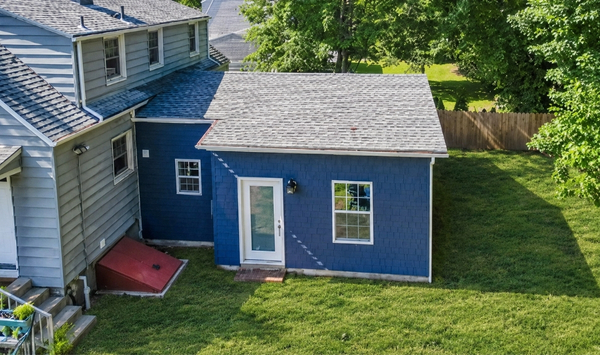
Building an ADU can solve a real housing problem.
It can create a private place for a parent. It can help an adult child live more independently. It can add rental income. It can also create a future downsizing option on land you already own.
But most homeowners pause when they reach the money question.
How do you pay for it?
The best ADU financing option in Connecticut depends on your home equity, income, credit, property, project scope, and long-term goal. It also depends on the real cost of the project, not just a starting number.
Financing an ADU is not only about getting approved for a loan. You also need to know whether your property can support the ADU, what your town allows, what site work may be needed, and what the full project investment could include.
This guide explains the best ADU financing options, what to expect, and the mistakes to avoid before you apply.
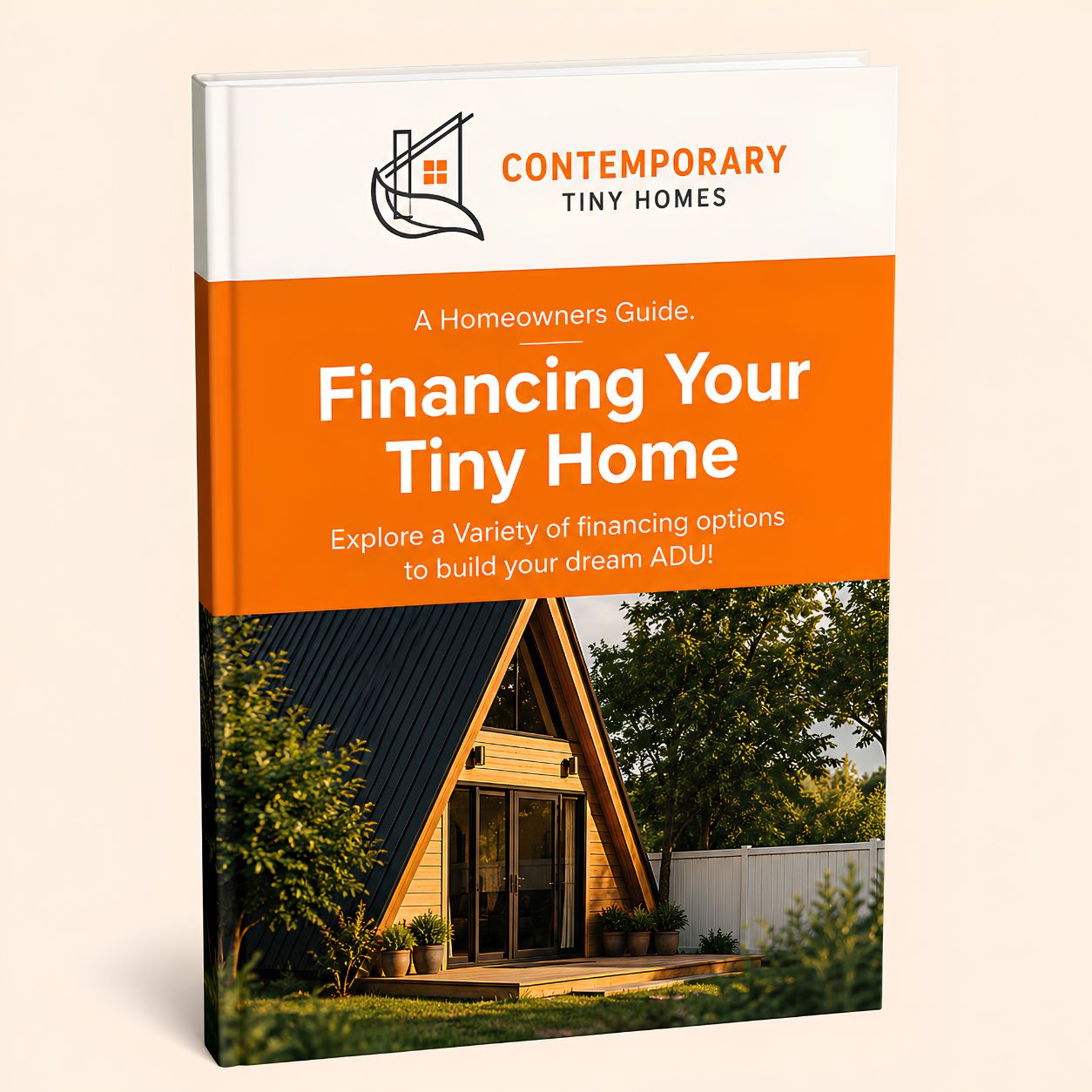
What Are the Best ADU Financing Options in Connecticut?
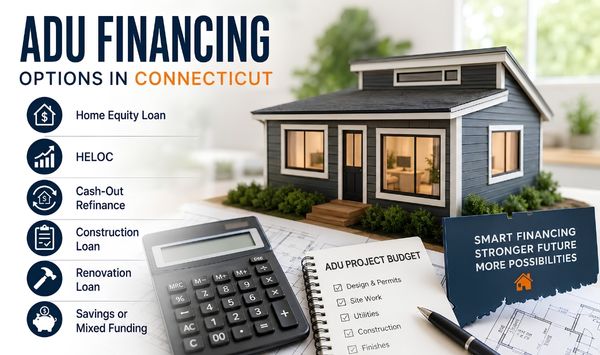
The best ADU financing options usually include a home equity loan, HELOC, renovation HELOC, cash-out refinance, construction loan, renovation loan, personal loan, savings, or a mixed funding approach.
There is no single best choice for every homeowner.
A homeowner with strong equity may prefer a HELOC. A homeowner with limited current equity may need a renovation or construction loan that considers the future value of the property. A homeowner focused on rental income may compare the monthly payment against projected rent.
The better question is not only:
Can I finance an ADU?
The better question is:
What financing option fits my property, total ADU cost, monthly budget, and long-term use?
Contemporary Tiny Homes notes that ADU financing can help Connecticut homeowners pay for design, permitting, site work, utilities, and construction. Their financing page also explains that many custom ADU projects in Connecticut fall in the $150,000 to $300,000+ planning range, depending on size, finish level, site conditions, utility needs, permitting, and ADU type.
That is why financing should be paired with a property feasibility review. A loan approval may help with funding, but it does not tell you where the ADU can go or what your town will allow.

What ADU Financing Options Should You Compare?
There are several ways to finance an accessory dwelling unit. The right choice depends on your financial profile and the project.
Home Equity Loan
A home equity loan lets you borrow against the equity in your home.
This option often gives you a fixed loan amount, fixed interest rate, and predictable monthly payment. It can work well when your ADU project cost is clearly defined.
A home equity loan may be a good fit if you want stable payments and do not want the flexibility of a line of credit.
HELOC
A HELOC is a home equity line of credit.
This option lets you draw money as needed, up to an approved limit. It can be useful for ADU projects because design, permits, site work, and construction may happen in phases.
A HELOC may work well for homeowners with strong equity who want flexibility during the ADU process.
The CTH financing page highlights HELOCs as a common option and notes that some lending options may offer online applications, fast funding, and terms that vary by lender.
Renovation HELOC
A renovation HELOC may consider the future value of the property after the ADU is built.
This can help homeowners who do not have enough current equity to cover the full project. Instead of only looking at the value of the home today, the lender may consider what the home could be worth after the ADU is complete.
This can be useful for homeowners who have a strong ADU plan but need more borrowing power.
Cash-Out Refinance
A cash-out refinance replaces your current mortgage with a new, larger mortgage. The difference between the old balance and the new loan amount can be used for the ADU.
This may work if your current mortgage rate is close to available rates. It may also help if you prefer one long-term mortgage payment.
But it may not be the best choice if your current mortgage has a much lower rate. Refinancing the full balance could increase your total borrowing cost.
Construction Loan
An ADU construction loan may help fund a project that does not exist yet.
This option may be useful when the project requires a larger budget or when the lender needs to review plans, builder scope, project cost, and future value.
Construction loans may require more documentation than a simple personal loan or HELOC.
Renovation Loan
A renovation loan can be used for certain home improvement or rehabilitation projects.
Some renovation loan programs may be relevant when the ADU is part of a larger improvement plan or when the project involves converting or adding living space.
The CTH financing page references ADU-specific and renovation-related lending resources, including FHA, Fannie Mae, Freddie Mac, and CHFA options that may apply depending on borrower and property requirements.
Personal Loan
A personal loan may be faster than equity-based financing.
But it may come with higher rates, shorter repayment terms, and lower borrowing limits. This may make it a better fit for smaller ADU-related improvements than a full detached ADU build.
Savings or Mixed Funding
Some homeowners use savings for part of the project and financing for the rest.
This can reduce the loan amount and help keep monthly payments lower.
For example, a homeowner may use savings for design and permitting, then use a HELOC or construction loan for the larger build phase.
Rental-Based Strategy
Some homeowners build an ADU for rental income.
In that case, the financing plan should compare projected rent with the monthly payment, taxes, insurance, vacancy, maintenance, and reserves.
Rental income can be a major motivation for ADU buyers, but it should be reviewed carefully with local rules and realistic numbers.
Want to know whether your property is a fit before choosing a loan? Schedule a consultation to review feasibility, ADU options, cost factors, financing considerations, and next steps.
What Should You Expect With ADU Cost, Timeline, and Financing?
Before choosing ADU financing, you need a realistic project scope.
Many Connecticut ADU buyers are not only asking how much the project costs. They want to know what is included, what is excluded, and what could increase later. Cost distrust is one of the biggest buyer concerns because homeowners worry that the starting price is not the real price.
That means financing should not be based on a vague estimate.
It should be based on the likely project type, property conditions, and scope.
ADU Cost Factors
The cost to build and finance an ADU can depend on many factors.
These may include:
ADU size
Studio, one-bedroom, two-bedroom, or larger layout
Attached ADU vs detached ADU
Garage conversion or interior ADU
Kitchen and bathroom needs
Foundation work
Site access
Utility trenching
Electrical service
Water, sewer, or septic
Heating and cooling
Permits and inspections
Survey needs
Wetlands or drainage issues
Finish level
Appliances
Accessibility features
A smaller garage conversion or interior ADU may cost less than a new detached backyard ADU. But that depends on the condition of the existing structure.
A detached ADU may require more site work, utility runs, foundation work, and exterior construction. That can affect both the total investment and the financing amount.
Why Feasibility Comes Before Financing
It can be tempting to apply for financing first.
But that can create problems.
A lender may approve a number before you know what the property actually requires. If setbacks, septic, utility distance, wetlands, access, or town rules add cost, the original financing number may not be enough.
That is why the best order is:
Review property feasibility.
Define the ADU type.
Estimate the likely project scope.
Compare financing options.
Move into design, permits, and construction.
This approach gives homeowners a clearer path.
Timeline Expectations
The financing timeline depends on the loan type.
A personal loan may move faster. A HELOC may depend on equity review and lender requirements. A construction loan or renovation loan may require more documentation, plans, estimates, appraisals, and project scope.
The full ADU timeline may include:
Initial consultation
Property feasibility review
Budget planning
Financing review
Loan application or pre-approval
Design planning
Permit preparation
Town review
Construction
Inspections
Final walkthrough
Homeowners should plan for the full process, not only the build phase.
What Lenders May Review
Lenders may look at several factors.
These can include:
Credit score
Income
Debt-to-income ratio
Home equity
Current home value
Estimated project cost
After-repair value
Builder scope
Project plans
Rental income potential
Loan type
Repayment terms
The CTH financing page also notes that project documentation may include a project estimate, builder scope, plans, appraisal, permit information, or draw schedule depending on the financing option.
The stronger your project plan, the easier it is to compare financing options clearly.
What Mistakes Should You Avoid When Financing an ADU?
ADU financing can help make the project possible. But the wrong approach can create delays or budget pressure.
Here are the biggest mistakes to avoid.
Mistake 1: Applying Before Checking Feasibility
Do not start with the loan alone.
Start with the property.
Your town rules, setbacks, septic, wetlands, parking, lot shape, utilities, and survey status can all affect whether the ADU can move forward.
A loan approval does not guarantee that the ADU can be built where you want it.
Mistake 2: Treating the Starting Price as the Final Price
A starting price is not the same as a full project budget.
Ask what is included. Also ask what is not included.
Important items include:
Design
Permits
Survey needs
Septic review
Utility connections
Site work
Foundation
Appliances
HVAC
Electrical service
Inspections
Finishes
The clearer the scope, the better your financing plan will be.
Mistake 3: Borrowing the Maximum Amount
Getting approved for a large amount does not mean you should borrow all of it.
Look at the monthly payment. Look at your comfort level. Think about future expenses. Leave room for changes.
This is especially important if you are using a variable-rate product like a HELOC.
Mistake 4: Choosing the Wrong Loan Type
A HELOC, renovation HELOC, construction loan, personal loan, and cash-out refinance all solve different problems.
A HELOC may be best for strong current equity. A construction loan may help when future value matters. A cash-out refinance may work for some homeowners but may not be ideal if their current mortgage rate is low.
The best loan type depends on your situation.
Mistake 5: Ignoring ADU Use Case
How you plan to use the ADU matters.
An ADU for a parent may be judged differently than an ADU built for rental income. A family ADU may be more about privacy, safety, and long-term flexibility. A rental ADU may require more focus on projected rent, occupancy, reserves, and local rental rules.
Your financing plan should match the reason you are building.
Mistake 6: Not Comparing Lenders
Loan terms can vary.
Compare interest rates, fees, repayment terms, draw schedules, closing costs, lien position, and prepayment rules.
Do not compare only the monthly payment. Compare the full cost and flexibility of the loan.
Mistake 7: Waiting Too Long to Ask Questions
Many homeowners assume they cannot finance an ADU before they have explored all options.
That may not be true.
Some homeowners may need a different loan structure. Others may need to improve credit, build equity, reduce debt, or prepare documentation before moving forward.
Even if now is not the right time, a financing conversation can show what steps to take next.
Frequently Asked Questions
What is the best way to finance an ADU?
The best way depends on equity, credit, income, project cost, and use case. High-equity homeowners may consider a HELOC or home equity loan. Lower-equity homeowners may explore renovation HELOCs or construction loans.
Can you finance an ADU with little equity?
It may be possible. Some renovation or construction loan options may consider future property value after the ADU is complete. Requirements vary by lender.
Can rental income help qualify?
In some cases, yes. Some lenders may consider projected ADU rental income if it is properly documented and supported by underwriting or appraisal requirements.
Are there ADU grants in Connecticut?
There is not one universal Connecticut ADU grant for every homeowner. Programs and incentives can change, so homeowners should review current options with a lender or ADU specialist.
Should I get financing before calling an ADU contractor?
It is better to start with feasibility and project scope. This helps you understand what you may need to finance before choosing a loan.
What Is the Best Next Step?
The best ADU financing option in Connecticut depends on your equity, budget, income, property, credit, and project goals.
Home equity loans, HELOCs, renovation HELOCs, cash-out refinancing, construction loans, renovation loans, personal loans, savings, and mixed funding can all be worth comparing.
But financing should not happen in a vacuum.
You need to know what is possible on your property, what your town may allow, what site conditions may add cost, and what the full project scope may include.
Contemporary Tiny Homes is a full-service ADU contractor that designs and builds custom accessory dwelling units for homeowners across Connecticut.
Ready to find out what is possible on your property? Book a consultation to review ADU feasibility, financing considerations, cost factors, permits, and next steps.


Copyright 2026. All rights reserved. Norwalk, CT
Connecticut's New Home Construction Contractor License: #NHC.0017654
EPA Lead-Safe Certified NAT-F269966-1