

















Knowledge Center: Your Go-To Resource for ADUs and Tiny Living
Knowledge Center: Your Go-To Resource for ADUs and Tiny Living
Email [email protected]
Phone 860-TINY-HOM (es)
Tiny Homes for Sale in Connecticut vs. Custom ADUs: Which Option Makes More Sense?
Many Connecticut homeowners start their search with a simple phrase: "tiny homes for sale in Connecticut".
It makes sense. A tiny home sounds like a practical way to add living space without buying another house. You may be thinking about a private place for a parent, a backyard living space for family, a rental unit, or a smaller home you can use later in life.
But in Connecticut, the better question is not always, “Where can I buy a tiny home?”
The better question is, “What can I legally and realistically build on my property?”
That is where the difference between browsing tiny homes and planning a custom ADU becomes important. A tiny home may look like the right solution online, but a custom accessory dwelling unit is often the better path if you want a permitted, code-compliant, long-term living space built around your specific property.
Quick Answer: Tiny Home or Custom ADU?
For many homeowners, a custom ADU in Connecticut makes more sense when the goal is permanent living space, family housing, rental income, or long-term property flexibility.
A tiny home listing can be helpful for inspiration. It can show you layouts, finishes, and space-saving ideas. But a listed tiny home does not automatically answer the biggest questions Connecticut homeowners need to solve.
Can it go on your lot? Will your town allow it? Can it be detached? Does your septic or sewer setup support it? How far will utilities need to run? What will the real total cost look like after permits, site work, foundation, and connections?
A custom ADU starts with those questions first. That makes it a stronger option for homeowners who want clarity before getting attached to a floor plan.
Why Connecticut Homeowners Search for Tiny Homes
Searches like tiny homes Connecticut, CT tiny homes, tiny homes CT, and tiny homes for sale in CT usually come from people trying to solve a real housing need.
Most homeowners are not just shopping for something small. They are trying to create a better use for property they already own.
You may want an in law suite for a parent who needs to be close but still wants independence. You may want a separate entrance for an adult child. You may want a backyard ADU that creates long-term rental income. You may want a one-level home with fewer stairs for future downsizing. Or you may simply want a private small home on the property that gives your family more flexibility.
That is why the conversation should move beyond “tiny houses for sale Connecticut” and into property feasibility. The real issue is not just whether a tiny home exists. The real issue is whether your land, town rules, budget, and goals can support the project.
Tiny Home vs. ADU: What Is the Difference?
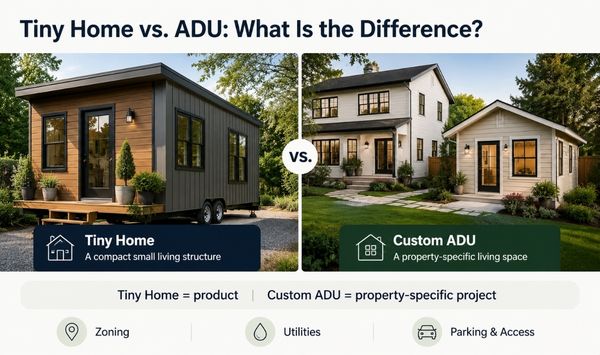
A tiny home is usually a small house or compact living structure. Some are built on foundations. Some are built on wheels. Some are marketed for seasonal use, guest use, or flexible living. The challenge is that not every tiny home is suitable or permitted as a permanent living space on a Connecticut property.
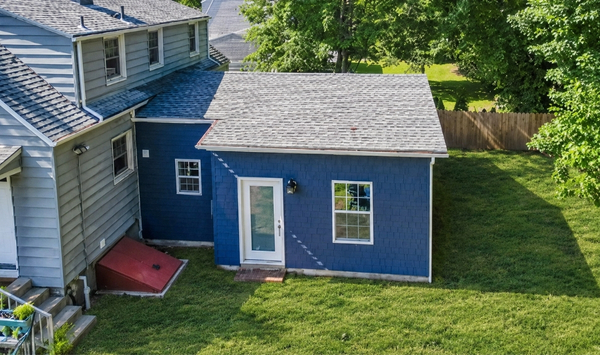
An ADU, or accessory dwelling unit, is a secondary residential unit on the same property as a primary home. Depending on your property and local rules, it may be a detached ADU in the backyard, an attached ADU connected to the main house, or a conversion of an existing structure.
The difference is simple:
A tiny home is often a product. A custom ADU is a property-specific project.
That matters because Connecticut homeowners need more than a model they like. They need a structure that works with zoning, setbacks, building code, utilities, septic or sewer, parking, access, and the way the space will actually be used.
The Biggest Question: What Is Possible on Your Property?
Before comparing tiny home models, floor plans, or finishes, you need to know what your property can support.
This is the question that can determine the entire project.
Your property may be affected by town ADU rules, lot size, lot shape, setbacks, wetlands, septic capacity, sewer access, utility distance, existing structures, trees, slopes, driveway access, and parking requirements. A backyard that looks open may still have limits. A large lot may still have septic concerns. A narrow lot may make a detached unit difficult. A home that seems perfect for an addition may need a different layout once zoning and site conditions are reviewed.
This is why “for sale” does not always mean “buildable here.”
You might find a tiny home that looks perfect online. But if it does not fit your town rules or property conditions, it may not be the right path.
Start With Feasibility First
Want to know whether your property is a fit for an ADU? Schedule a consultation to review feasibility, layout options, site conditions, and next steps for your Connecticut home.
Why a Custom ADU Can Be the Better Fit
A custom ADU is planned around your property, your town, and your goals from the beginning.
That is important because two homeowners can have the same goal but completely different project paths. One property may be ideal for a detached ADU. Another may need an attached ADU because of setbacks or lot shape. Another may be better suited for a garage conversion or existing structure conversion. Another may have enough space, but utility trenching or septic work may affect the budget.
A custom ADU helps you avoid guessing.
Instead of asking, “Which tiny house should I buy?” you start with, “What is actually possible here?”
That shift can save time, reduce confusion, and help you avoid investing energy into a design that does not match your property.
Tiny Home Pricing vs. Real ADU Project Pricing
Many people search for tiny homes in CT for sale because they want to understand cost. That is reasonable. But the listed price of a tiny home is not always the same as the full cost to create a legal, livable space on your property.
A full Connecticut ADU project may include design, permits, zoning review, foundation, site preparation, utility connections, electrical work, water and sewer connections, septic review, heating and cooling, appliances, delivery or construction access, surveys, engineering, and finish selections.
These items can make a major difference in the real investment range.
This is where many homeowners get frustrated. A starting price can sound simple, but the final project depends on the property. Septic conditions, utility distance, wetlands, access, or missing survey documents can all change the path.
That does not mean a custom ADU is always more expensive. It means the process should be more transparent.
The goal is not to chase the lowest starting number. The goal is to understand what is included, what is not included, and what could affect the budget before you make a decision.
When Tiny Homes for Sale in CT May Not Be the Right Fit
A listed tiny home may not be the best choice if you need a permanent living space that is legal, comfortable, and built for long-term use.
It may create issues if you want to use the space as a rental unit, house an aging parent, create a one-level living space, or add long-term value to your property. It can also become complicated if your town has specific ADU requirements, your lot has setback restrictions, utilities need to run a long distance, or septic capacity needs to be confirmed.
This does not mean tiny homes are a bad idea. It means a tiny home listing is not automatically the same as a permitted ADU in Connecticut.
For homeowners who want certainty, the custom ADU process is often a better match because it starts with real conditions instead of assumptions.
When a Custom ADU Makes More Sense
A custom ADU may be the stronger choice when you want the new space to serve a clear purpose.
1. You Want an In Law Suite for a Parent
Many families want to keep a parent close without taking away privacy or independence. A custom ADU can create a comfortable in law suite for a parent with a separate entrance, one-level layout, practical bathroom design, and a private living area.
For many adult children, this is about more than square footage. It is about peace of mind. A backyard ADU can help family stay nearby while still giving everyone space.
2. You Want Rental Income
A custom ADU can also support long-term rental income if your town rules and property conditions allow it.
A rental-focused ADU needs more planning than a standard tiny home. You have to think about privacy, parking, entrances, utilities, durability, storage, and how the space will function for a tenant. The goal is not just to build something small. The goal is to create a livable, practical, long-term rental space.
3. You Want Future Downsizing Flexibility
Some homeowners build an ADU for family now and plan to use it for themselves later. Others want rental income now and future living flexibility later.
This is one of the biggest advantages of a custom ADU. You can think ahead about bedroom size, storage, laundry, bathroom access, natural light, and daily comfort. A good ADU should solve today’s need while still making sense years from now.
4. You Want a Private Backyard Living Space
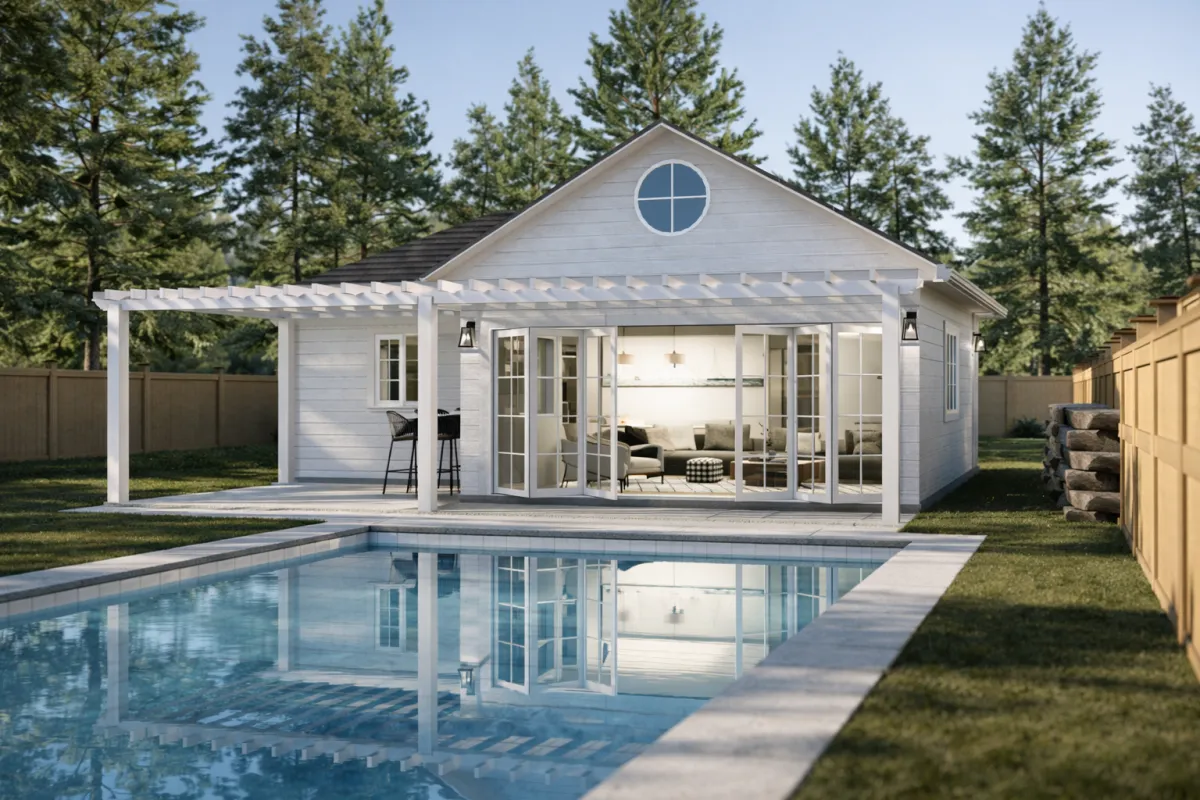
A detached ADU can feel like a true private small home on the property. It can work well for parents, adult children, guests, or tenants because it creates separation from the main house.
The main question is whether your lot can support it. Setbacks, utilities, access, wetlands, septic, trees, and parking can all affect detached placement.
5. You Want a Connected Living Space
An attached ADU may make more sense if you want the new space connected to the main home. This can work well for caregiving, family support, or properties where detached placement is difficult.
Attached ADUs can also be useful when the lot is narrow or when utility connections may be easier through the existing home. The best option depends on your property and the level of independence the new living space needs.
Detached ADU vs. Attached ADU in Connecticut
There is no single best ADU type for every homeowner.
A detached ADU may be better if privacy, separation, and a backyard cottage feel are important. It can be a strong option when you want a separate living environment for a parent, tenant, or family member.
An attached ADU may be better when connection to the main home matters, when the property has limited backyard space, or when the project works better as an addition or conversion.
Both options can be excellent. The right answer depends on town rules, lot shape, setbacks, utilities, privacy goals, accessibility needs, and your budget range.
What to Check Before Choosing a Tiny Home or ADU
Before you choose between tiny homes for sale in Connecticut and a custom ADU, answer these questions:
Does my town allow ADUs?
Can the ADU be detached, attached, or either?
Where could it fit on my lot?
What size can I build?
Are there setback, height, or lot coverage limits?
Do wetlands, slopes, trees, or access issues affect placement?
Will septic, sewer, water, or electric create added cost?
Do I have a current property survey?
Is there enough parking or driveway access?
What is included in the starting price, and what could add cost later?
These questions help you move from curiosity to a real plan.
Review Your ADU Options
Thinking about a tiny home, in law suite, or backyard ADU? Schedule a consultation to review what is possible before you commit to a design, model, or budget.
What Homeowners Often Get Wrong About Tiny Homes
The most common mistake is assuming that smaller means simpler.
A small structure can still involve zoning, permits, building code, foundation, utilities, septic or sewer, inspections, site work, and long-term livability. If someone will live there full time, the structure needs to function like a real home.
That is why a custom ADU is often the safer path for Connecticut homeowners. It brings the design conversation together with the site conversation.
Instead of buying first and solving problems later, you review feasibility first and build from there.
Check If Your Property Is Feasible for an ADU
Can a Custom ADU Add Property Value?
A well-planned ADU may support property value by adding flexible living space and potential income-producing use, depending on the property, market, build quality, and local rules.
But the value is not only about resale. It is also about usability.
A custom ADU can help you make better use of land you already own. It can support a parent now, create long-term rental income later, or become a future downsizing option. That flexibility is one reason more homeowners are comparing tiny homes Connecticut searches with custom ADU solutions.
Final Comparison: Tiny Homes vs. Custom ADUs
Tiny homes for sale in Connecticut are useful for inspiration. They help homeowners explore layouts, sizes, and small-space design ideas.
Custom ADUs are better when you need the project to work as a real living space on your property.
A tiny home search often starts with the structure. A custom ADU process starts with the property.
That difference matters.
If you want a backyard rental, in law suite, detached ADU, attached ADU, or private small home on your property, you need answers about legality, placement, utilities, budget, and timeline before choosing a model.
Schedule Your Free Consultation Call
So, Which Option Makes More Sense?
If you are only gathering ideas, searching for tiny homes for sale in Connecticut is a useful starting point.
But if you want a permanent living space for family, rental income, future downsizing, or better use of your property, a custom ADU is usually the stronger option.
A custom ADU helps answer the questions that matter most:
Can I build this legally? Where can it go? What size makes sense? What will affect cost? Can it support my family or rental goals? What should I do next?
The best project is not just the smallest home. It is the right home for your Connecticut property.
Find Out What Is Possible on Your Property
Before you buy a tiny home or commit to a floor plan, find out whether your property is a good fit for an ADU.
Schedule a consultation with Contemporary Tiny Homes to review feasibility, layout options, town considerations, and next steps for your project.
Frequently Asked Questions (FAQs)
Are tiny homes legal in Connecticut?
Tiny homes may be possible in Connecticut, but legality depends on the property, town rules, building code, utilities, and how the structure will be used. For permanent living space, many homeowners explore an ADU path.
What is the difference between a tiny home and an ADU?
A tiny home is a small house or compact living structure. An ADU is a secondary dwelling unit on the same property as a primary home and is planned around local rules, permits, utilities, and long-term residential use.
Can I build a detached ADU in Connecticut?
A detached ADU may be possible depending on your town and property. Lot size, setbacks, septic or sewer, wetlands, access, and parking can all affect whether a detached ADU will work.
Is an attached ADU better than a detached ADU?
An attached ADU may be better when you want connection to the main home or have limited backyard space. A detached ADU may be better when privacy and separation matter most. The right choice depends on your property and goals.
Can an ADU be used as an in law suite?
Yes. Many homeowners use ADUs as in law suites for parents or family members. This can create privacy, independence, and one-level living while keeping family close.
Can I rent out an ADU in Connecticut?
Rental options depend on local rules, property conditions, and how the ADU is permitted. Review your town requirements before planning an ADU for rental income.
What should I do before buying a tiny home in CT?
Before buying a tiny home in Connecticut, confirm whether your property can legally support it as a living space. Review town rules, setbacks, utilities, septic or sewer, parking, survey status, and whether a custom ADU is a better fit.
Copyright 2026. All rights reserved. Norwalk, CT
Connecticut's New Home Construction Contractor License: #NHC.0017654
EPA Lead-Safe Certified NAT-F269966-1