















Knowledge Center: Your Go-To Resource for ADUs and Tiny Living
Knowledge Center: Your Go-To Resource for ADUs and Tiny Living
Email [email protected]
Phone 860-TINY-HOM (es)
Can You Build a Backyard Living Space or ADU on Your Bridgeport, CT Property?
If you own a home in Bridgeport and you are thinking about adding a backyard living space, in-law suite, or small second home on your property, the honest answer is this: possibly, but only after your specific lot is reviewed.
That is where qualified ADU projects really begin.
Most homeowners do not start by asking about finishes or floor plans. They start with practical questions.
Can I build an ADU in Bridgeport?
Will it fit on my property?
What does the city look at first?
What could slow it down?
What is the next step if I am serious?
That is exactly how real Connecticut buyers think. They want a clear answer on feasibility, zoning, site fit, cost drivers, and next steps before they invest more time. If you are exploring a Bridgeport ADU, this is the right way to approach it.
What is a backyard living space in Bridgeport?
In plain language, a backyard living space is often what people mean when they say Accessory Dwelling Unit, or ADU.
It could be:
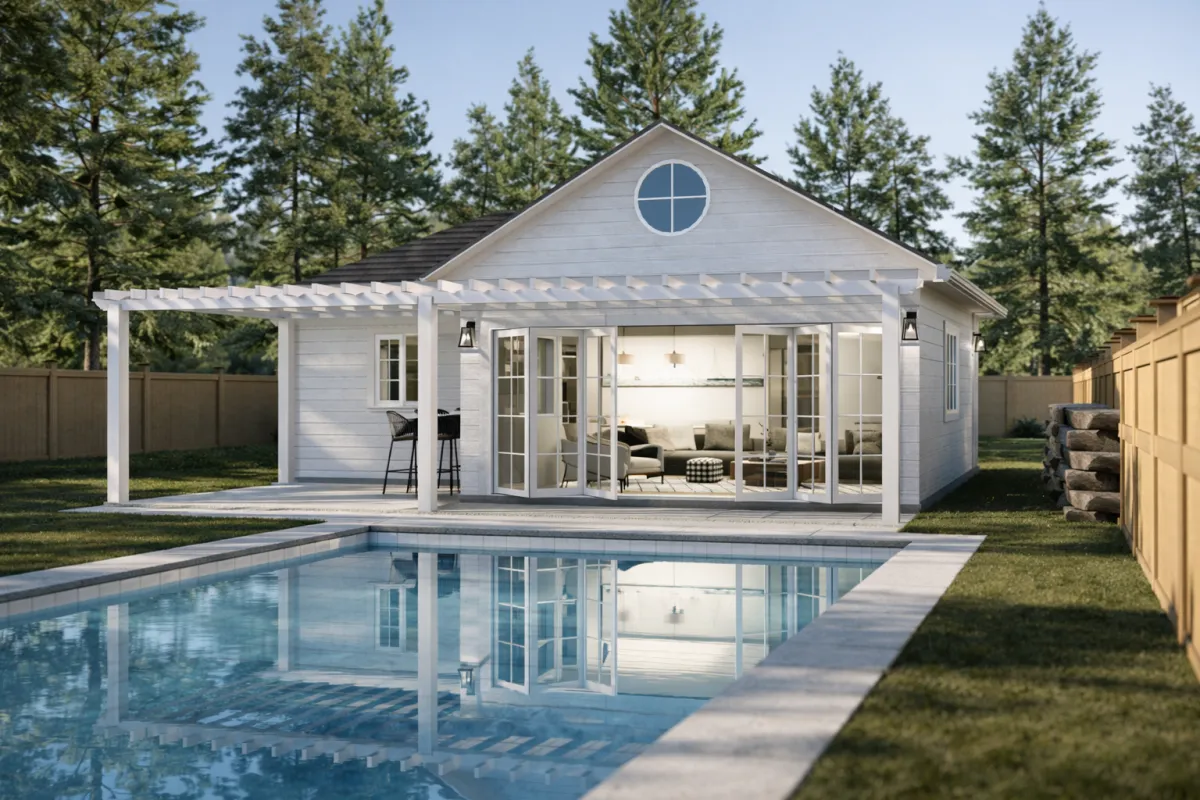
a detached backyard home
an in-law suite for a parent
a private small home on the property
a flexible space for rental income now and future family use later
For search and permitting purposes, you may hear terms like accessory dwelling unit, detached ADU, or attached ADU. But for many homeowners, the simpler phrase is still the strongest one: backyard living space.
That plain-language framing matters because many serious buyers are not searching with technical zoning terms at first. They are searching with real-life use cases like in-law suite in Bridgeport, backyard home for mom, or can I build a small second home on my property.

The first question is not design. It is feasibility.
If you are asking whether you can build a backyard living space in Bridgeport, the first question is not:
What model do I want?
It is:
Can I legally and practically build this on my property?
That comes down to your exact parcel.
Two homes in the same neighborhood can have very different outcomes. One property may have room for a detached ADU with a straightforward review path. Another may run into setbacks, access issues, site constraints, or added city review.
This is why the best early move is not guessing from your yard size. It is checking the parcel, the zoning context, and the likely review path before you make big decisions.
Want to know whether your Bridgeport property is a fit for an ADU? Schedule a consultation to review feasibility, layout options, and next steps for your Connecticut home.
Why Bridgeport homeowners need a property-specific answer
A citywide answer is not enough.
Bridgeport gives homeowners tools to look up zoning information by parcel, which is useful because the real question is never just, “Does Bridgeport allow ADUs?” The real question is, what does Bridgeport allow on my lot, with my setbacks, my site conditions, and my placement options?
That matters because homeowners often underestimate the number of factors that affect a Bridgeport backyard living space project:
zoning classification
building type allowed on the parcel
setbacks and siting
lot shape and access
wetlands or coastal review issues
survey availability
utility routing
permit sequence
This is also why better blog content converts better. Buyers do not want hype. They want a realistic explanation of what is allowed, what can complicate the project, and what to do next.

What to check first before planning an ADU in Bridgeport
If you are serious about building an ADU in Bridgeport, CT, these are the questions to answer first.
1. What zoning applies to the parcel?
Start with the property itself.
Before talking about floor plans or pricing, check which zoning rules apply to your lot. That helps you understand whether the parcel may support an accessory dwelling unit, detached ADU, or another type of residential improvement.
This step matters because many homeowners assume enough yard space means enough build potential. It does not. The parcel has to work on paper before it can work in practice.
2. Is this likely to be simple or more complex?
Some projects move through a cleaner path than others.
A Bridgeport property may need more review if there are site complications, unusual placement needs, nearby wetlands, coastal considerations, or variance-related questions. That does not automatically stop the project. But it does affect planning, timeline, and expectations.
A good ADU builder in Connecticut should help you identify these issues early so you are not surprised later.
3. Do you have the documents that help move things faster?
One of the most common conversion blockers is missing paperwork.
Homeowners often want to move fast, but they do not have:
an updated survey
site photos
old zoning or town notes
utility details
a clear use case for the structure
If you are still in discovery, gather whatever you already have. Even partial information can help make the first consultation more productive.
4. Are there site constraints that could affect placement?
This is where real projects get won or lost.
A property may look easy at first glance, but the details matter:
where the structure can actually sit
how access and parking work
whether utilities are simple or costly to extend
whether the lot shape creates design limits
whether one-level or no-step access changes placement
For family-use projects, these questions matter even more. If the backyard living space is for a parent, spouse, or future downsizing plan, accessibility cannot be treated as an afterthought.
5. What is the actual next step?
This question matters more than most companies realize.
Serious homeowners do not just want information. They want to know what happens next.
A useful next step should help you understand:
what is possible on your property
what issues need deeper review
what documents are still needed
what layout direction may fit best
what the process looks like from here
That is the difference between a vague inquiry and a qualified consultation.
What Bridgeport homeowners often get wrong
The biggest mistake is assuming:
“I have enough yard, so I should be able to build.”
A backyard living space in Bridgeport is not decided by yard size alone.
It is shaped by local review, siting, permit requirements, access, documentation, and whether the project fits the parcel in a way the city can actually approve.
Another common mistake is jumping straight to price before feasibility is clear.
That is understandable, but it often creates frustration. Many buyers want a number first. What they really need first is a realistic understanding of what could change that number, such as site work, utility complexity, special reviews, or document gaps.
That is why the strongest early content is feasibility-first. It builds trust and attracts better leads.
Do you need permits and city review for a Bridgeport backyard living space?
In most real-world cases, yes.
If you are building a new backyard structure, planning an ADU in Bridgeport, or making major residential changes, you should expect zoning review and building permit steps to be part of the process.
That is not a reason to avoid the project. It is a reason to follow the right sequence.
A smart process usually looks like this:
Review the property and use case
Check parcel and zoning context
Identify siting or site-risk issues early
Gather the right documents
Align the layout with the property
Move into the required application path with better clarity
This is where a done-for-you process becomes valuable. The more serious the homeowner, the more they want guidance through zoning, permits, design coordination, and construction planning.
When a backyard living space makes the most sense
A Bridgeport backyard living space is often a strong fit when the goal is practical, not speculative.
The strongest use cases usually look like this:
For family living
A private in-law suite can help keep family close while protecting privacy and independence.
For aging in place or accessibility
A one-level backyard home can create safer living for a parent, spouse, or future downsizing plan.
For rental income and future flexibility
Some homeowners want a detached backyard unit for rental income now, then future personal use later.
For making better use of existing property
Instead of buying another home, some Bridgeport homeowners want to create more living flexibility on land they already own.
These are not abstract lifestyle ideas. These are the real motivations that show up again and again in qualified ADU conversations.
How to improve your chances of a smoother consultation
If you are preparing to speak with an ADU builder near Bridgeport, bring these basics with you:
your property address
any survey you already have
site photos
notes on who the space is for
your preferred unit type, such as detached or attached
any known timeline goals
any questions about privacy, access, utilities, or rental use
This makes the consultation more useful and helps move you from broad curiosity to a property-based conversation.
Thinking about an in-law suite, detached ADU, or backyard home in Bridgeport? Schedule a consultation to review what may be possible on your property before making big decisions.
So, can you build a backyard living space on your Bridgeport property?
Maybe. But the useful answer is not citywide.
It is property-specific.
If your parcel supports the siting, fits the local review path, and does not run into a major issue that cannot be solved, then a backyard living space in Bridgeport, CT may be very possible.
If the lot has access challenges, document gaps, special review triggers, or site constraints, the project may still be possible, but it needs a more careful path.
The goal is not to get a fast generic yes.
The goal is to get a real answer about:
what is possible
what could complicate it
what layout may fit best
what steps come next
That is what serious homeowners actually want.
Final thought
The Bridgeport homeowners who move forward with the most confidence are not the ones who start with the prettiest floor plan.
They are the ones who get clarity first.
What is possible on my property?
What could affect the timeline or permit path?
What should I do next?
That is the real search behind most high-intent phrases like can I build an ADU in Bridgeport CT, Bridgeport backyard living space, and in-law suite Bridgeport Connecticut.
If you want a clear answer for your lot, not just a general article, the next step is a real feasibility conversation.
Ready to explore what is possible on your property? Schedule a consultation to review feasibility, zoning considerations, layout direction, and next steps.
FAQs
Can you build an ADU in Bridgeport, Connecticut?
Yes, some homeowners may be able to build an ADU in Bridgeport, Connecticut, but the answer depends on the exact parcel, zoning context, site conditions, and required permit path. The most useful answer is property-specific, not citywide.
What is a backyard living space in Bridgeport?
A backyard living space in Bridgeport is often what homeowners call an Accessory Dwelling Unit, or ADU. It can be a detached ADU, an in-law suite, or a small second home on the property used for family, rental income, or future flexibility.
How do I know if my Bridgeport property is a fit for an ADU?
Start by checking the parcel, zoning context, likely placement area, and any known site constraints. A consultation can help you understand whether the property supports the project and what issues may need extra review.
Do I need zoning approval for a backyard living space in Bridgeport?
In many cases, yes. If you are constructing a new structure or making a major residential change, zoning review is commonly part of the process before building can move forward.
Do I need a building permit for an ADU in Bridgeport?
Yes, a building permit is typically part of the process for new residential structures and major building work in Bridgeport.
Do I need a survey before planning a Bridgeport ADU?
Often, yes. An updated survey can help with siting, setbacks, review, and early feasibility. Missing surveys are one of the most common reasons serious projects slow down.
What can stop a backyard ADU project in Bridgeport?
Common issues include zoning conflicts, setbacks, access limitations, site constraints, missing documents, utility complexity, wetlands concerns, and unclear placement options.
Is a detached ADU allowed in Bridgeport?
A detached ADU may be possible on some Bridgeport properties, but it depends on the parcel, local standards, and whether the structure can be sited in a compliant and practical way.
What is the first step before talking to an ADU builder?
The best first step is to gather your property address, any survey or site records you already have, and a clear description of how you want to use the space. That helps turn a general idea into a productive feasibility conversation.
What should an ADU consultation help me understand?
A good ADU consultation should help you understand what may be possible on your property, what site or zoning issues could affect the project, what documents are needed, and what the next step should be.

Copyright 2026. All rights reserved. Norwalk, CT
Connecticut's New Home Construction Contractor License: #NHC.0017654
EPA Lead-Safe Certified NAT-F269966-1