


















Knowledge Center: Your Go-To Resource for ADUs and Tiny Living
Knowledge Center: Your Go-To Resource for ADUs and Tiny Living
Email [email protected]
Phone 860-TINY-HOM (es)
Attached vs. Detached ADU in Connecticut: Which Makes More Sense for Your Property?
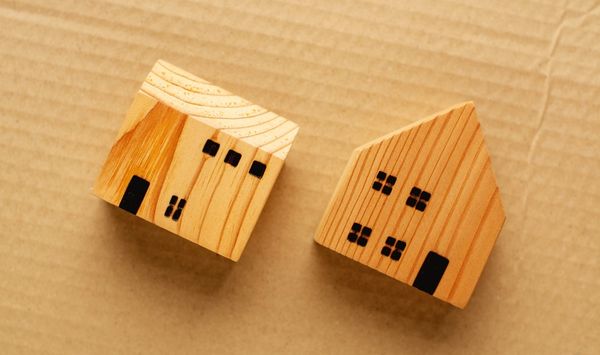
If you are deciding between an attached ADU and a detached ADU in Connecticut, the best choice usually comes down to five things: local zoning, usable lot space, privacy needs, utility complexity, and how you plan to use the ADU now and later.
For some homeowners, an attached ADU is the better fit because it keeps family closer, works better on tighter lots, and can simplify access. For others, a detached ADU makes more sense because it creates stronger privacy, a more independent living experience, and better long-term flexibility.
The right answer is not just about preference. It is about what your Connecticut property can realistically support.
Quick answer: attached or detached ADU?
An attached ADU often makes more sense when:
your lot has limited backyard space
direct access for family is important
the new space should feel connected to the main home
the project may benefit from shorter utility runs
A detached ADU often makes more sense when:
privacy is the highest priority
your property has enough usable space
you want more separation between households
you want stronger long-term flexibility for future use
If your goal is closeness with convenience, attached is often the stronger option. If your goal is independence with privacy, detached is often the stronger option.
What is an attached ADU?
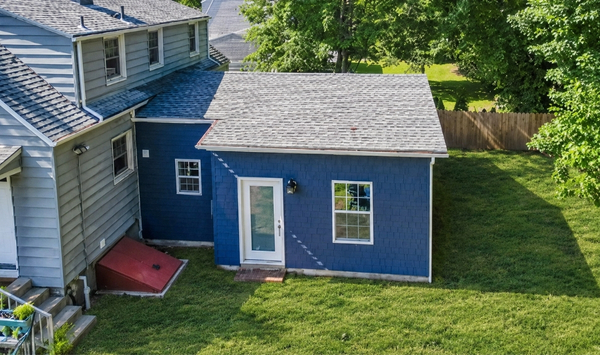
An attached ADU is an accessory dwelling unit connected to the main house. It may share a wall, be built as a side addition, or be added to the rear of the home depending on the property and local requirements.
For many Connecticut homeowners, an attached ADU works well when the goal is to create an in-law suite or family living space that feels private but still closely connected.
Why homeowners choose an attached ADU
Homeowners often choose an attached ADU because it can make day-to-day life easier for family use. It may also be the better solution when the lot is tight or when the homeowner wants the new space to feel like a natural extension of the house.
When an attached ADU usually makes more sense
An attached ADU is often the stronger fit when:
the lot is narrow, constrained, or irregular
the town is more favorable to attached placement
a parent or family member needs easier access
utility planning may be more efficient through the main house
the homeowner wants support, connection, and convenience
This type of accessory dwelling unit is often a good fit for aging parents, multigenerational living, recovery needs, or homeowners who want family close without a fully separate structure.
What is a detached ADU?
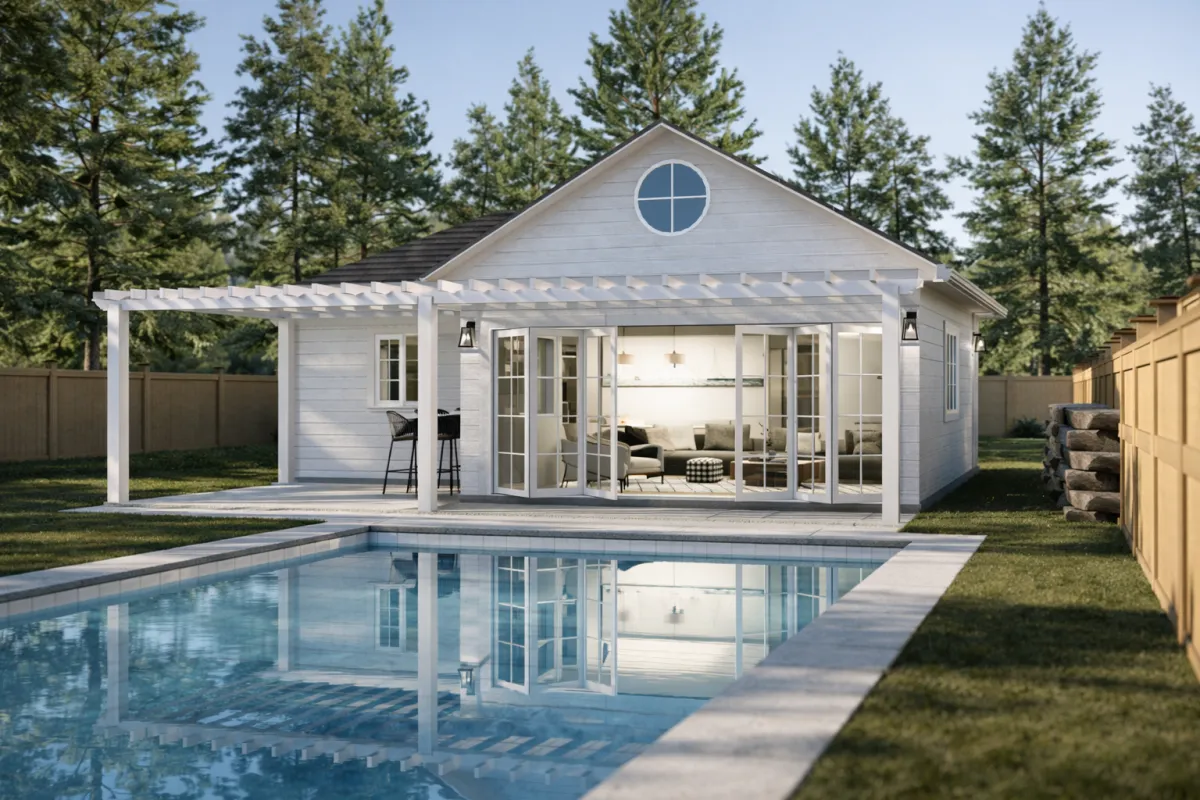
A detached ADU is a separate small home built on the same property as the main residence. It stands apart from the primary house and usually feels more independent.
This is the option many homeowners picture when they think about a backyard cottage, private in-law suite, or flexible second dwelling that can evolve with the family over time.
Why homeowners choose a detached ADU
The biggest reason homeowners choose a detached ADU is privacy. A detached layout gives both households more breathing room and often feels more comfortable for long-term living.
Detached ADUs also appeal to homeowners who want a more independent setup for a parent, adult child, guest, or future long-term occupant.
When a detached ADU usually makes more sense
A detached ADU is often the stronger fit when:
the property has enough buildable space
privacy matters more than direct connection
the homeowner wants a more independent living experience
the future use may change over time
the goal is to create a true second household feel on the property
This layout is often a strong fit for parents who want independence, adult children returning home, long-term planning, or homeowners considering flexible future use.

How do you decide between an attached and detached ADU?
The attached vs. detached ADU decision usually becomes clearer when you look at the property through five practical filters.
1. What does your town allow?
This is the first step. Some Connecticut towns are more flexible with detached ADUs, while others are easier to work with when the ADU is attached to the house. Even if a Connecticut ADU is generally allowed, setbacks, lot coverage, septic conditions, utility access, and site layout can still limit what is realistic.
That is why homeowners often get stuck researching online. They find general ADU zoning information, but they still do not know what applies to their specific lot.
Before committing to one layout, it helps to confirm:
whether attached and detached ADUs are both allowed
where the unit can be placed on the property
what setback or coverage rules apply
whether utilities, septic, or site access affect the design
Want to know what your property can actually support? Schedule a consultation to review feasibility, lot fit, utility planning, and next steps for your Connecticut home.
2. How much usable space does your lot really have?
Even if a detached ADU is allowed, the lot still has to support it. A detached structure may need enough room for the building footprint, setbacks, utility trenching, construction access, walkway planning, and separation from site constraints like wetlands, slope, or septic fields.
If the property is tight or constrained, an attached ADU may simply be the more realistic option. If the backyard has enough clear buildable space, a detached ADU may create a better overall layout.
3. How important is privacy?
Privacy is often the deciding factor.
If the goal is to keep a parent or family member nearby while preserving independence, a detached ADU usually wins on privacy. If the goal is easier access, support, and everyday convenience, an attached ADU may be the better fit.
A simple way to think about it is this:
If you want closeness with separation, detached usually makes more sense.
If you want connection with convenience, attached usually makes more sense.
4. How will utilities and site work affect the project?
Many homeowners choose a layout first and only later realize that site work changes the cost and complexity of the project.
A detached ADU may require:
longer utility runs
more trenching
more site coordination
more driveway or walkway planning
An attached ADU may reduce some of that complexity, but not always. Every property is different, which is why it helps to evaluate the real site before making a decision.
5. How will you use the ADU now and later?
A good Connecticut ADU should work for your current needs and your future plans.
Questions worth asking include:
Is this primarily for a parent or family member?
Does the person need one-level living or easier access?
Will privacy matter more over time?
Could the space be used differently later?
Are you trying to create flexibility without outgrowing the property?
Many homeowners are not just solving for today. They are making a property decision that should still make sense years from now.

Common mistake: choosing emotionally before choosing practically
A lot of homeowners picture the ideal result before checking whether the lot, town, and site conditions support it. They imagine a detached backyard cottage or assume an attached ADU will be cheaper and easier, then find out the actual property points them in another direction.
The common surprises are:
the town has more restrictions than expected
the lot does not support the preferred placement
utilities change the cost picture
privacy needs become more important during planning
the best option for the property is not the one that seemed best at first
There is nothing wrong with having a preference. The mistake is treating that preference like the answer before the site has been reviewed.
Which option is better for long-term value?
The better option is the one that fits your lot, family goals, and future use most effectively. A well-planned ADU can add flexibility, livable space, and long-term value to a Connecticut property, but the value comes from choosing the layout that works best on the site.
In some cases, an attached ADU creates the most practical and efficient solution. In other cases, a detached ADU delivers the privacy and independence that make the project more attractive and more useful over time.
Final thought
The best attached vs. detached ADU decision is not about what sounds better in theory. It is about what works best on your Connecticut property.
An attached ADU can be the smartest path when convenience, family access, and tighter lot conditions matter most. A detached ADU can be the stronger option when privacy, separation, and long-term flexibility matter most.
Both can be strong ADU solutions. The key is choosing the one your lot, town, and household can genuinely support.
Want to know whether an attached or detached ADU makes more sense for your property? Schedule a consultation to review feasibility, layout options, privacy goals, and next steps for your Connecticut home.
FAQs
Is an attached or detached ADU cheaper in Connecticut?
Not always. An attached ADU can sometimes simplify utility planning or reduce site work, but the total cost still depends on the lot, layout, access conditions, and local requirements.
Which type of ADU offers more privacy?
A detached ADU usually offers more privacy because it is fully separated from the main house.
Are detached ADUs allowed in Connecticut?
Many Connecticut properties can support a detached ADU, but the final answer depends on town rules, setbacks, septic conditions, and site layout.
What is the best ADU for family use?
That depends on how close the family wants to be. An attached ADU often works best for convenience and support, while a detached ADU often works better for independence and privacy.
Can an ADU improve property value?
In many cases, yes. A well-designed accessory dwelling unit can add usable space, flexibility, and long-term appeal when it fits the property and the future use plan.


Copyright 2026. All rights reserved. Norwalk, CT
Connecticut's New Home Construction Contractor License: #NHC.0017654
EPA Lead-Safe Certified NAT-F269966-1