






















Knowledge Center: Your Go-To Resource for ADUs and Tiny Living
Knowledge Center: Your Go-To Resource for ADUs and Tiny Living
Email [email protected]
Phone 860-TINY-HOM (es)
How Much Value Does an ADU Add to Your Home in Connecticut?
If you are considering an accessory dwelling unit, one question can influence almost every decision that follows: how much value does an ADU add?
It is a reasonable question.
Building an ADU is a significant investment. Before moving forward, homeowners want to understand whether the additional living space could improve property value and whether the project makes financial sense.
There is no universal percentage or dollar amount that every ADU adds to a home.
The value depends on the property, location, ADU type, size, design, construction quality, permitted status, functionality, and local housing market.
An ADU can also create value that is not measured only by resale price.
It may provide private housing for an aging parent. It can give an adult child more independence. It may create potential rental income. It can provide guest space or give homeowners an option to downsize on their own property later.
For homeowners in Connecticut, the better question is not simply, "Does an ADU increase property value?"
The better question is: What kind of value could the right ADU create for my specific property?
How Much Value Does an ADU Add to a Home?
An ADU can increase the usefulness and marketability of a property, but there is no reliable percentage increase that applies to every home.
That distinction matters.
Two homeowners could build ADUs of similar sizes and still see different effects on their properties.
One ADU might be a private detached unit with a bedroom, kitchen, bathroom, laundry, and separate entrance.
Another might be a smaller attached ADU that shares part of the main structure.
The properties may also be in different housing markets.
The condition of the main house, quality of the ADU, lot size, location, legal status, and demand for flexible living space can all influence the result.
This is why homeowners researching how much does an ADU increase property value should be cautious about articles that promise a specific return.
A better way to think about ADU value is to consider several types of value together.
Property Value
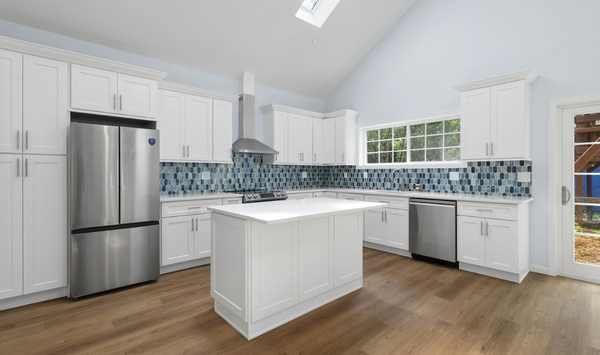
A professionally designed and permitted ADU creates additional functional living space.
That may improve the appeal of the property to buyers who want more flexibility.
However, the actual impact on appraised or resale value depends on the individual property and market.
Family Housing Value
An ADU can provide independent living space while keeping family nearby.
For example, an aging parent could have a private residence without living inside the main home.
An adult child could gain more independence without moving far away.
For some families, solving that housing problem is a major part of the project's value.
Rental Income Potential
Some homeowners consider an ADU because of potential rental income.
A separate living space may create an opportunity to generate income from property that the homeowner already owns.
Rental income should not be treated as guaranteed. Applicable rules, market conditions, operating expenses, and property-specific restrictions should be reviewed before relying on projected income.
Future Flexibility
An ADU does not have to serve the same purpose forever.
A unit built for a parent today might later become housing for an adult child.
A rental unit could eventually become a downsizing option for the homeowner.
That flexibility can make an ADU useful for decades.
What Factors Determine How Much Value an ADU Adds?
If you are trying to determine how much value an ADU adds to a property, start by looking at what is actually being built.
Not every ADU provides the same experience.
Attached vs. Detached ADUs
One of the first decisions is whether an attached ADU or detached ADU makes more sense.
An attached ADU shares part of the primary structure.
It can work well when available yard space is limited or when connecting the additional living area to the existing home makes practical sense.
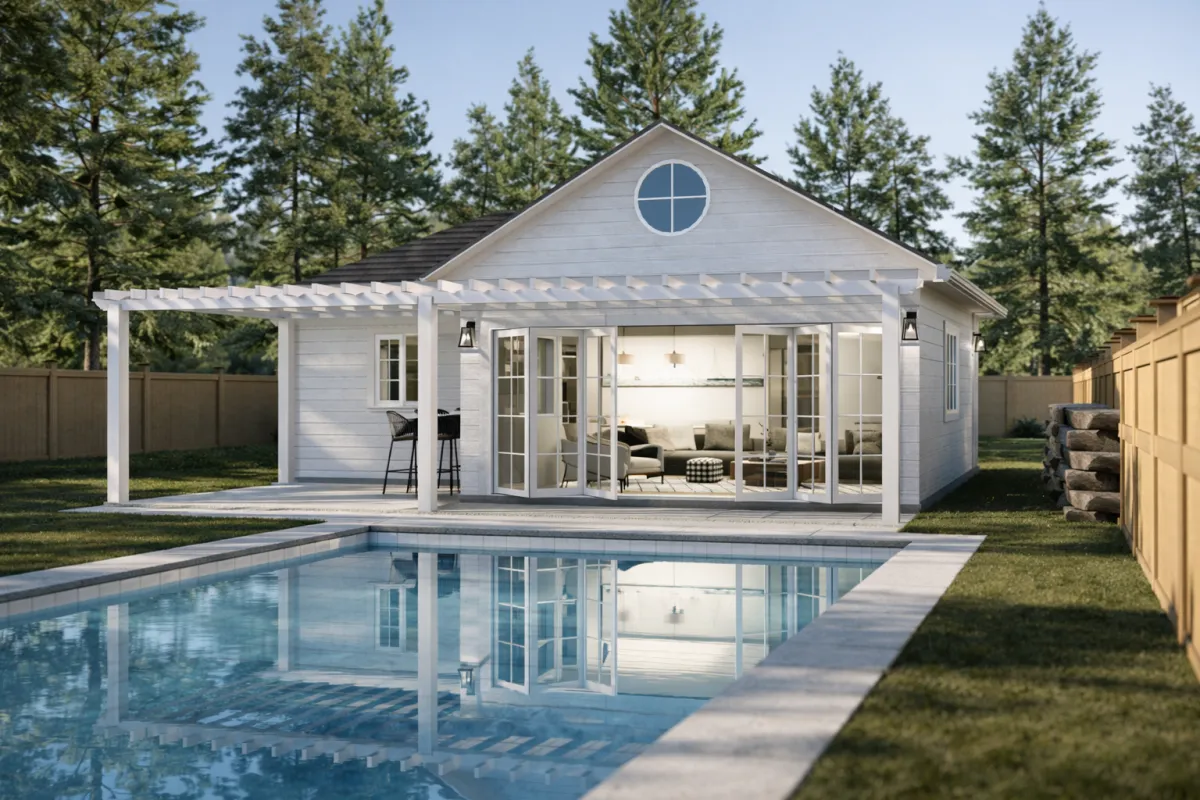
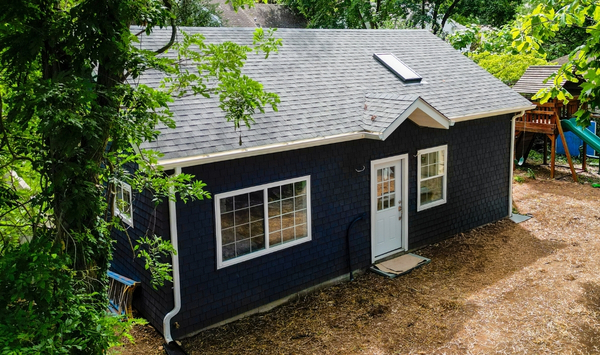
A detached ADU is a separate structure.
It can provide greater physical separation between the occupants of the main house and the ADU.
That privacy can be attractive for parents, adult children, guests, renters, or homeowners planning to move into the ADU themselves later.
Neither option automatically adds more property value.
The best choice depends on the lot, intended use, budget, and level of independence needed.
Size and Layout
Square footage matters, but bigger is not always better.
A smaller ADU with an efficient floor plan may be more useful than a larger unit with wasted space.
Think about how the ADU will actually function.
Does it have enough storage?
Is there a practical kitchen?
Does the bathroom work for the intended occupant?
Is there privacy between sleeping and living areas?
Can someone move through the space comfortably?
If the ADU is intended for an older parent or future downsizing, one-level living and accessibility may become especially important.
Good design should solve the housing problem first.
Construction Quality
Construction quality can influence how the ADU feels and performs over time.
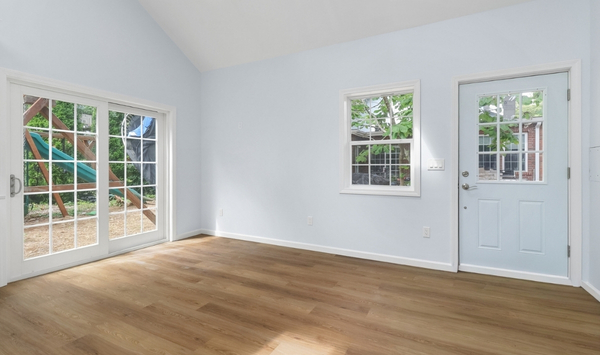
A custom ADU should not feel like temporary space.
The exterior should work with the property. Interior materials should make sense for the intended use. Heating, cooling, plumbing, electrical systems, windows, insulation, and finishes should be planned as parts of a complete residence.
A well-designed ADU may also be more appealing to future buyers than an awkward conversion or poorly planned addition.
Location on the Property
Placement matters.
A detached ADU positioned thoughtfully can provide privacy for both homes.
Poor placement may create problems with access, windows, parking, outdoor space, or the relationship between the ADU and main house.
Placement can also affect construction cost.
The farther an ADU is from existing utility connections, for example, the more site work may be required.
Permits and Legal Status
A homeowner should not evaluate ADU value without considering whether the space is properly approved for its intended use.
Permitting and local requirements can affect what can be built and how the property can be used.
This is another reason ADU feasibility should come before choosing a final floor plan.
What Is the Process for Determining Whether an ADU Makes Sense?
Before asking a contractor to build a specific design, understand the property.
A clear process can reduce uncertainty.
Step 1: Define Who the ADU Is For
Start with the reason for building.
Who will live there?
An aging parent?
An adult child?
A renter?
Guests?
You in the future?
The answer affects privacy, accessibility, number of bedrooms, entrances, storage, parking, and layout.
Step 2: Review the Property
Next, determine what the property may support.
Important conditions can include:
Lot size
Lot shape
Setbacks
Access
Parking
Existing structures
Utilities
Septic or sewer
Slopes
Wetlands
Trees
Survey information
A large backyard does not automatically mean there is a large buildable area.
Property lines and setbacks can reduce usable space.
Utilities or septic conditions can also change where an ADU should be located.
Step 3: Compare ADU Options
Once the property is better understood, compare realistic options.
An attached ADU may make sense.
A detached ADU may provide better privacy.
In some situations, converting existing space could be worth evaluating.
The decision should come from the property and the intended use, not simply from a floor plan found online.
Step 4: Develop the Design
Now the design can respond to real conditions.
Bedrooms, bathrooms, kitchen layout, entrances, windows, accessibility, storage, and exterior appearance can be planned around the homeowner's goals.
Step 5: Understand the Full Project Scope
Before comparing an ADU investment with potential property value, understand what the project may actually include.
A realistic scope provides a much better foundation for the decision.
Want to know whether your property is a fit for an ADU? Schedule a consultation with Contemporary Tiny Homes to review property feasibility, possible ADU options, site considerations, and the next steps before committing to a design.
What Does an ADU Cost Compared With the Value It Can Create?
Cost is where the value conversation becomes more complicated.
A homeowner might search how much does an ADU add to home value and find estimates about resale value.
But that information is only one side of the equation.
You also need to understand the likely total project investment.
ADU costs can include:
Property evaluation
Survey work
Design
Engineering
Permitting
Site preparation
Foundation work
Utility connections
Septic or sewer work
Construction
Electrical work
Plumbing
Heating and cooling
Kitchens
Bathrooms
Interior finishes
Exterior work
Landscaping or site restoration
Not every property requires the same work.
That is why starting prices can be misleading when they are viewed as total project prices.
Site Conditions Can Affect Cost
Imagine two homeowners choose the same detached ADU design.
The first property has easy construction access and nearby utility connections.
The second has a slope, longer utility runs, limited equipment access, and septic considerations.
The structures may look similar when finished.
The work required to build them may be very different.
This is why property feasibility and pricing are closely connected.
Think Beyond Resale Value
When deciding whether adding an ADU increases property value enough to justify the investment, consider how the space may be used before the property is sold.
If the ADU provides housing for a parent for several years, that has value.
If it gives an adult child an independent place to live, that has value.
If it produces permitted rental income, that may create financial value.
If it gives you a place to downsize later while remaining on your property, that creates another form of long-term value.
The right comparison is not always:
Construction cost vs. immediate resale increase.
It may be:
Total project investment vs. property value + years of useful living space + potential income + long-term flexibility.
That is a more complete way to evaluate whether an ADU is worth it.
What Mistakes Should You Avoid When Estimating ADU Property Value?
Mistake 1: Assuming Every ADU Adds the Same Percentage
Be cautious with claims that an ADU will automatically increase a home's value by a specific percentage.
Properties are different.
ADUs are different.
Markets are different.
The actual effect should be evaluated in context.
Mistake 2: Choosing a Design Before Checking the Property
A beautiful ADU design has little value if the lot cannot support it.
Start with feasibility.
Then choose a design that works with the property.
Mistake 3: Looking Only at Square Footage
The value of an ADU is not simply the number of additional square feet.
Privacy matters.
Layout matters.
Accessibility matters.
Location on the property matters.
How the space can be used matters.
A smaller, thoughtfully designed ADU can sometimes solve the homeowner's problem better than a larger unit.
Mistake 4: Assuming Rental Income Is Guaranteed
Potential rental income can be attractive.
But it should be evaluated carefully.
Local requirements, permitted use, rental demand, vacancy, maintenance, utilities, insurance, and other expenses can affect the actual financial result.
Do not build a financial plan around an ideal rental number without doing the research.
Mistake 5: Comparing Contractors Only by Starting Price
The lowest starting number does not automatically mean the lowest final project cost.
Ask what is included.
Ask what is excluded.
Ask about design, permits, utilities, site work, foundation, finishes, and property-specific conditions.
Clear scope matters.
Mistake 6: Designing Only for Today's Needs
Think about how the ADU could be used later.
A parent may live there today.
An adult child might use it later.
You may eventually move into it yourself.
Designing for more than one realistic use can increase the long-term usefulness of the space.
Frequently Asked Questions About ADU Property Value
Does an ADU Increase Property Value?
An ADU can increase a property's usefulness, marketability, and potential value, but there is no universal amount or percentage. The effect depends on the ADU, property, legal status, quality, location, and local market.
Does a Detached ADU Add More Value Than an Attached ADU?
Not automatically.
A detached ADU may provide greater privacy and independence. An attached ADU may make better use of a constrained property.
The better option depends on the lot and intended use.
Can an ADU Generate Rental Income?
An ADU may provide rental income potential when rental use is permitted and there is sufficient local demand.
Homeowners should review applicable requirements and realistic expenses before relying on rental projections.
Is an ADU Worth It in Connecticut?
It can be.
The answer depends on the total project investment and the value the ADU creates for the homeowner.
That value could include property value, family housing, potential rental income, privacy, and future flexibility.
Should I Get an Appraisal Before Building an ADU?
If understanding the potential effect on market value is important to your financial decision, speaking with a qualified local real estate appraiser can provide property-specific insight.
A contractor can explain design and construction. An appraiser is better positioned to discuss appraisal value.
Is Building an ADU a Good Investment for Your Connecticut Home?
So, how much value does an ADU add?
There is no single number that applies to every homeowner.
A thoughtfully designed and properly permitted accessory dwelling unit can create several forms of value.
It can add functional living space.
It can provide privacy for family.
It may create potential rental income.
It can make multigenerational living easier.
It can give homeowners more options as their needs change.
And it may improve the property's appeal and market value.
But the strongest ADU project does not begin with an estimated resale percentage.
It begins with the property.
Understand what can realistically be built. Identify the housing problem you want to solve. Compare attached and detached options. Understand site conditions. Get clarity on the likely project scope.
Then decide whether the investment makes sense for you.
For Connecticut homeowners, that approach creates a clearer path from an ADU idea to a useful, well-planned addition to the property.
Ready to find out what an ADU could look like on your property? Book a consultation with Contemporary Tiny Homes to review your property feasibility, attached and detached ADU options, potential site and cost factors, and the next steps toward designing and building a custom accessory dwelling unit that supports your long-term goals.
Talk To An ADU Expert


Copyright 2026. All rights reserved. Norwalk, CT
Connecticut's New Home Construction Contractor License: #NHC.0017654
EPA Lead-Safe Certified NAT-F269966-1